
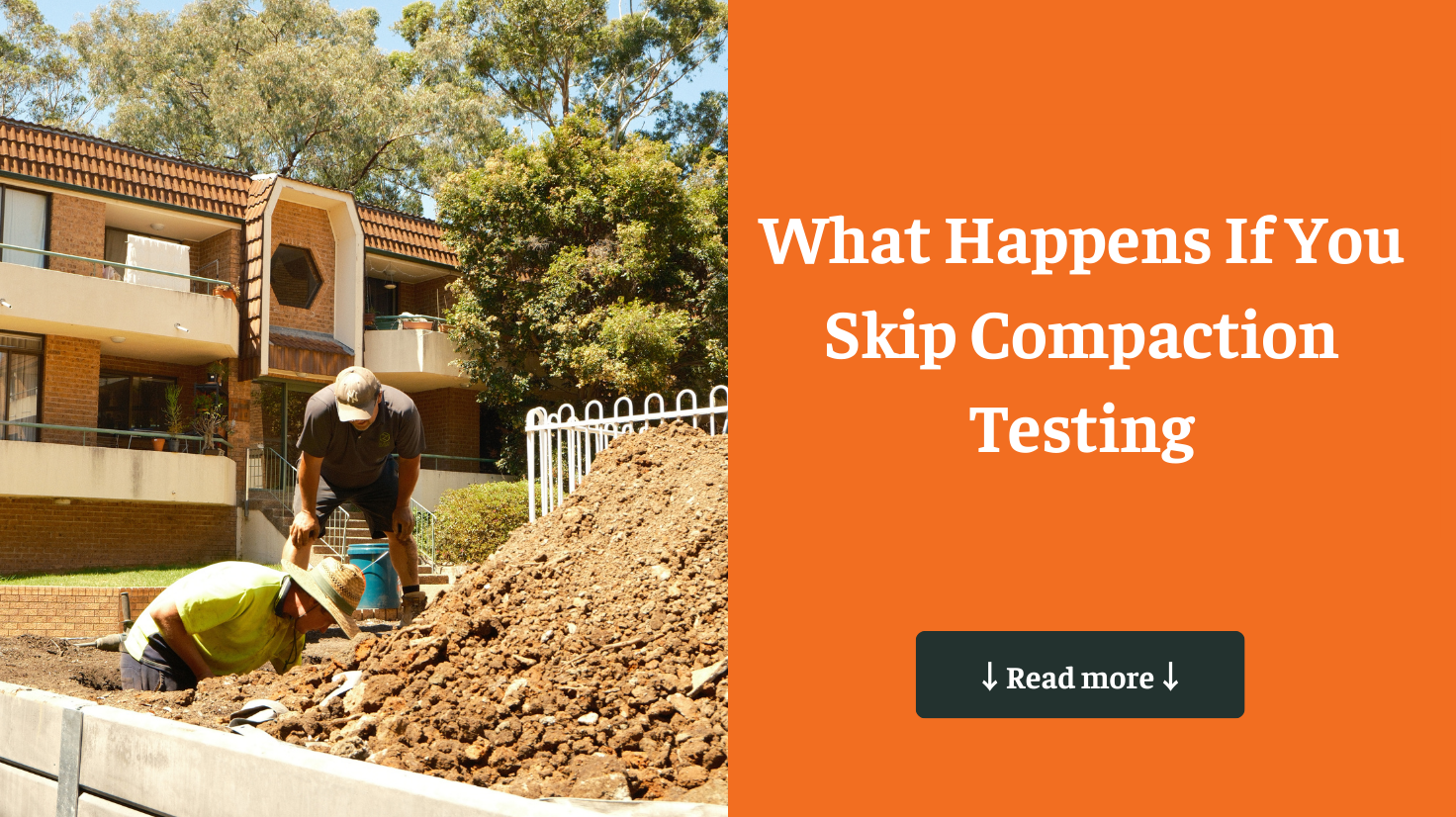
Compaction testing is one of the most critical controls in bulk earthworks. Yet on many projects, it is reduced, delayed, or skipped entirely in an attempt to save time or cost. While the consequences may not be immediately visible, the risks of proceeding without verification are significant and long-lasting.
For an overview of compliant bulk earthworks testing and supervision in NSW, refer to our guide here:
👉 https://idealgeotech.com.au/bulk-earthworks-testing-nsw/
This article explains what happens if you skip compaction testing, focusing on the key risks contractors, developers and asset owners face when earthworks are not properly verified.
1. Structural and Ground Stability Risks
When compaction testing is skipped, there is no confirmation that soil or fill has achieved the required density or moisture condition. As a result:
-
loose or poorly compacted layers may remain undetected
-
soil continues to compress after construction
-
uneven settlement can occur under slabs, pavements and footings
These issues often develop gradually, making them difficult and expensive to rectify once construction has progressed.
2. Increased Risk of Settlement and Movement
Without testing, earthworks rely purely on visual inspection, which cannot detect subsurface weaknesses. This increases the likelihood of:
-
differential settlement
-
soft spots forming beneath structural elements
-
movement under repeated loading (traffic, machinery, occupancy)
Settlement caused by poor compaction compromises both structural performance and long-term durability.
3. Failure to Meet Council and Engineering Requirements
Most councils and consulting engineers in NSW require documented compaction testing in accordance with project specifications and recognised earthworks standards. If testing is skipped:
-
councils may refuse to approve earthworks
-
subdivision or construction certificates can be delayed
-
engineers may withhold certification or request remedial works
Even if the earthworks appear satisfactory, the absence of test records can stop a project from progressing.
4. Higher Exposure to Water and Drainage Issues
Poorly compacted soil allows water to infiltrate more easily. Over time, this can lead to:
-
loss of soil strength
-
erosion beneath pavements or slabs
-
ongoing moisture-related movement
-
degradation of the subgrade
Water-related issues are one of the most common causes of long-term earthworks failure.
5. Financial and Contractual Risk
Skipping compaction testing removes a key layer of protection for contractors and developers. Without documented evidence:
-
it is difficult to prove work was completed correctly
-
liability for defects becomes harder to defend
-
rectification costs often exceed the original testing cost
Testing records provide objective proof of compliance and reduce dispute risk.
6. Reduced Confidence for Stakeholders
Compaction testing gives confidence to all parties involved in a project, including:
-
builders and earthworks contractors
-
engineers and certifiers
-
councils and asset owners
Without testing, uncertainty remains about ground performance, increasing project risk.
7. Verify Compaction Before It Becomes a Problem
Skipping compaction testing exposes projects to unnecessary structural, compliance and financial risk. Verifying compaction early ensures earthworks meet specifications and perform as intended.
Arrange compaction Test for your project
Fast turnaround. Clear, council-ready reporting. NSW-wide service.
Your customer-focused soil tester for bulk earthworks.