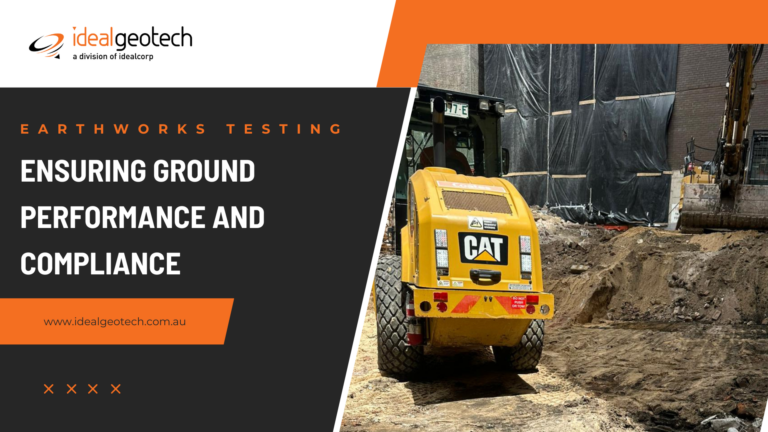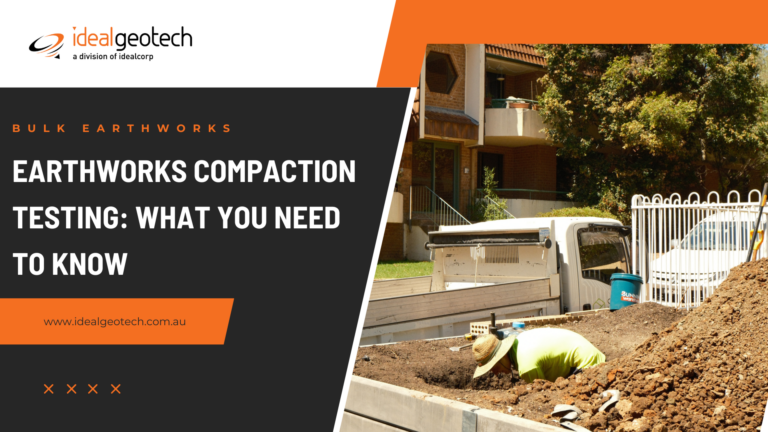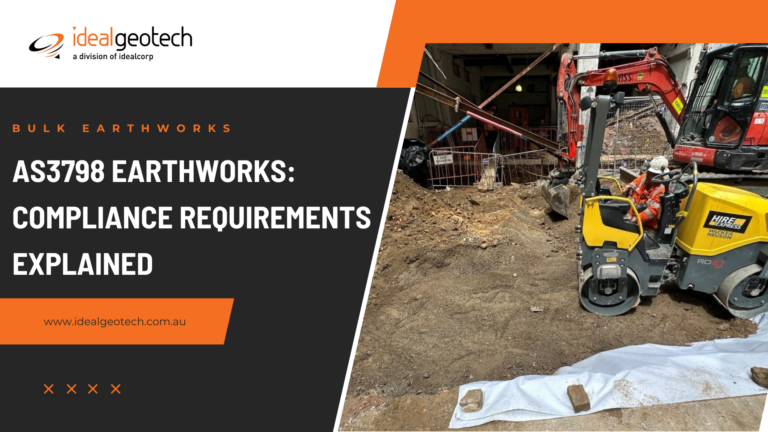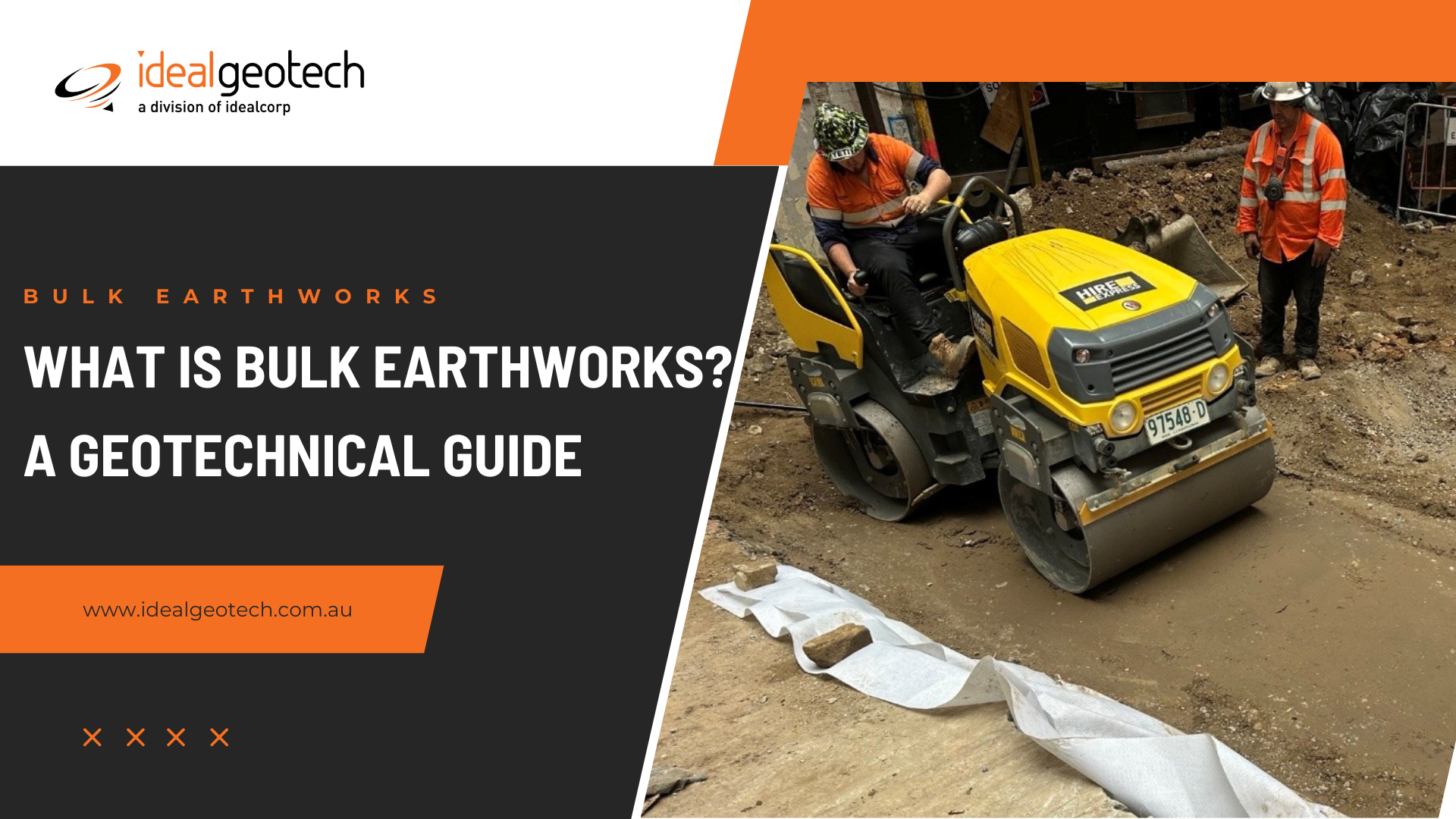
Bulk earthworks is a critical early phase of construction that directly influences ground performance, compliance and long-term structural stability.
From a geotechnical perspective, bulk earthworks is not simply about moving soil, it is about assessing, managing and validating ground conditions to ensure the site performs as designed.
This guide explains what bulk earthworks is, how it works, and why geotechnical involvement is essential for successful outcomes.
What Is Bulk Earthworks?
Bulk earthworks refers to the large-scale excavation, filling, placement and compaction of soil and engineered materials to create stable, level and compliant building platforms.
In geotechnical engineering, bulk earthworks focuses on:
-
Ground stability and performance
-
Material suitability and reusability
-
Moisture control and compaction
-
Compliance with AS3798 – Guidelines on Earthworks for Commercial and Residential Developments
Bulk earthworks typically occurs before foundations, pavements or structural elements are constructed, making it one of the most critical stages of any development.
What Activities Are Involved in Bulk Earthworks?
Bulk earthworks commonly includes:
-
Site stripping and preparation
-
Bulk excavation and filling
-
Cut and fill balancing
-
Placement of site-won or imported materials
-
Moisture conditioning and compaction
-
Testing and validation of placed materials
Each activity must be carefully controlled to prevent settlement, instability and future defects.
Why Is Geotechnical Engineering Critical in Bulk Earthworks?
Ground conditions vary significantly across sites, even within the same development. Without geotechnical oversight, bulk earthworks can introduce hidden risks that may not become apparent until after construction.
Geotechnical engineering ensures:
-
Materials placed on site are suitable and compliant
-
Compaction meets design and standard requirements
-
Moisture conditions are controlled
-
Long-term settlement and performance risks are minimised
Independent geotechnical input provides confidence that earthworks are executed in accordance with design intent and Australian Standards.
Ground & Material Assessment in Bulk Earthworks
A key component of bulk earthworks is assessing both the ground and the materials used to form the building platform.
This includes:
-
Classification of soils and aggregates
-
Assessment of site-won materials for reuse
-
Moisture behaviour and compaction characteristics
-
Laboratory testing such as PSD, MDD, CBR and soil reactivity
Understanding these factors allows earthworks to be planned efficiently while maintaining compliance and performance.
Level 1 and Level 2 Earthworks Supervision
Bulk earthworks in Australia is typically supervised in accordance with AS3798, which defines two levels of inspection and testing.
-
Level 1 Supervision applies to low-risk sites with uniform materials and conditions
-
Level 2 Supervision is required where conditions are more variable or higher risk
Geotechnical supervision includes on-site testing such as density, moisture content, proof-rolling and verification of placement procedures.
Compliance and Certification
At the completion of bulk earthworks, compliance documentation is essential for project progression.
Geotechnical reporting typically includes:
-
Compaction and density test results
-
CBR and laboratory testing data
-
Material classifications (VENM / ENM)
-
Environmental or contamination documentation where applicable
-
Level 1 or Level 2 certification confirming compliance with AS3798
This documentation provides traceability and confidence for subsequent construction stages.
When Should a Geotechnical Engineer Be Engaged?
For best outcomes, a geotechnical engineer should be involved:
-
Before bulk earthworks commence
-
During planning and earthworks strategy development
-
Throughout construction for testing and supervision
-
At completion for certification and handover
Early involvement reduces risk, improves efficiency and helps avoid costly rework.
Bulk Earthworks with Confidence
Bulk earthworks sets the foundation for every structure that follows.
With independent geotechnical assessment, testing and supervision, projects gain certainty that the ground is stable, compliant and fit for purpose.
IdealGeotech supports bulk earthworks through clear advice, timely reporting and practical geotechnical solutions, helping projects take control from the ground up.
Thinking about a geotechnical report for your project?
Get a fast, accurate, fixed-price report designed for your site conditions.
Request a Quote