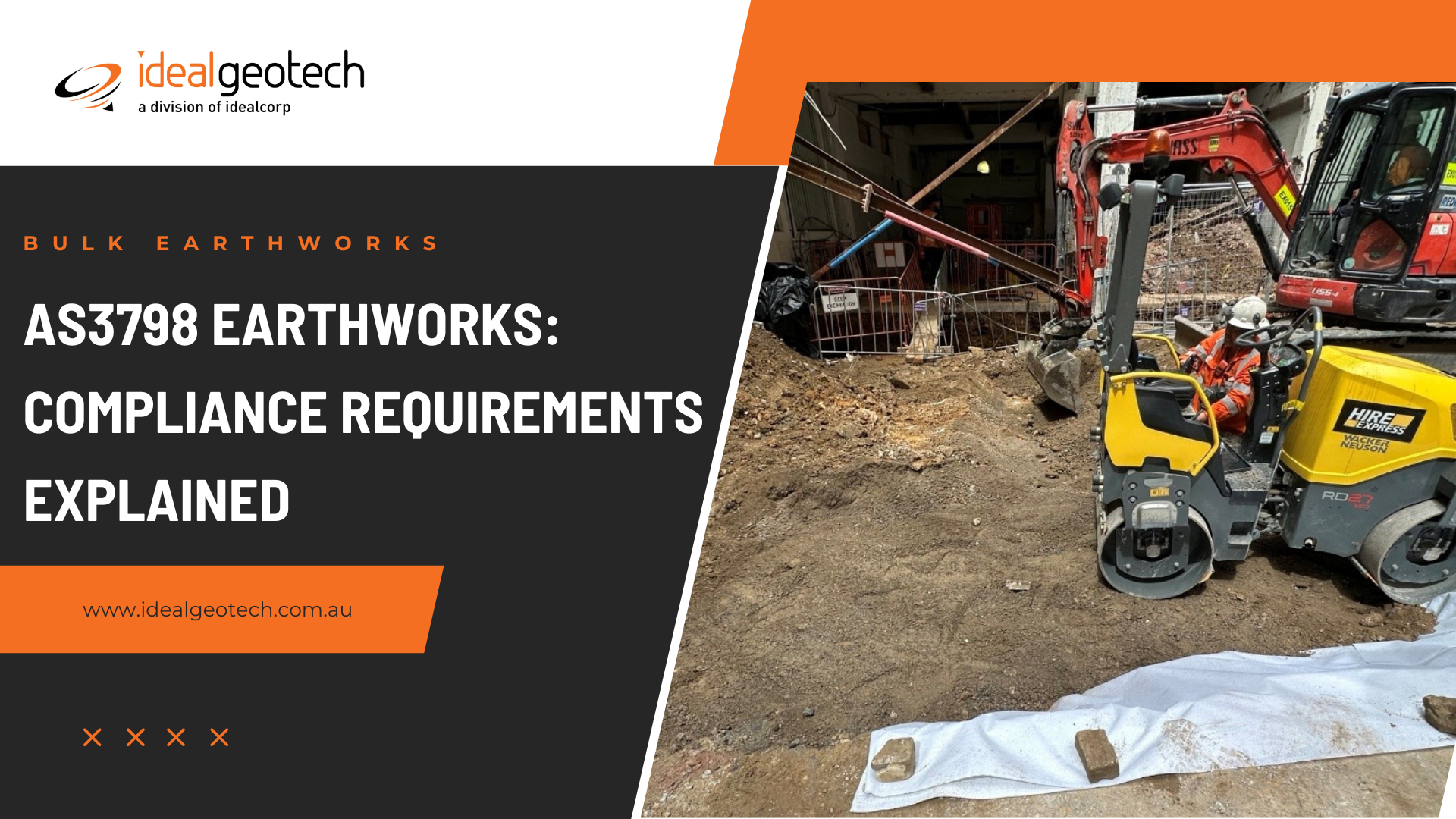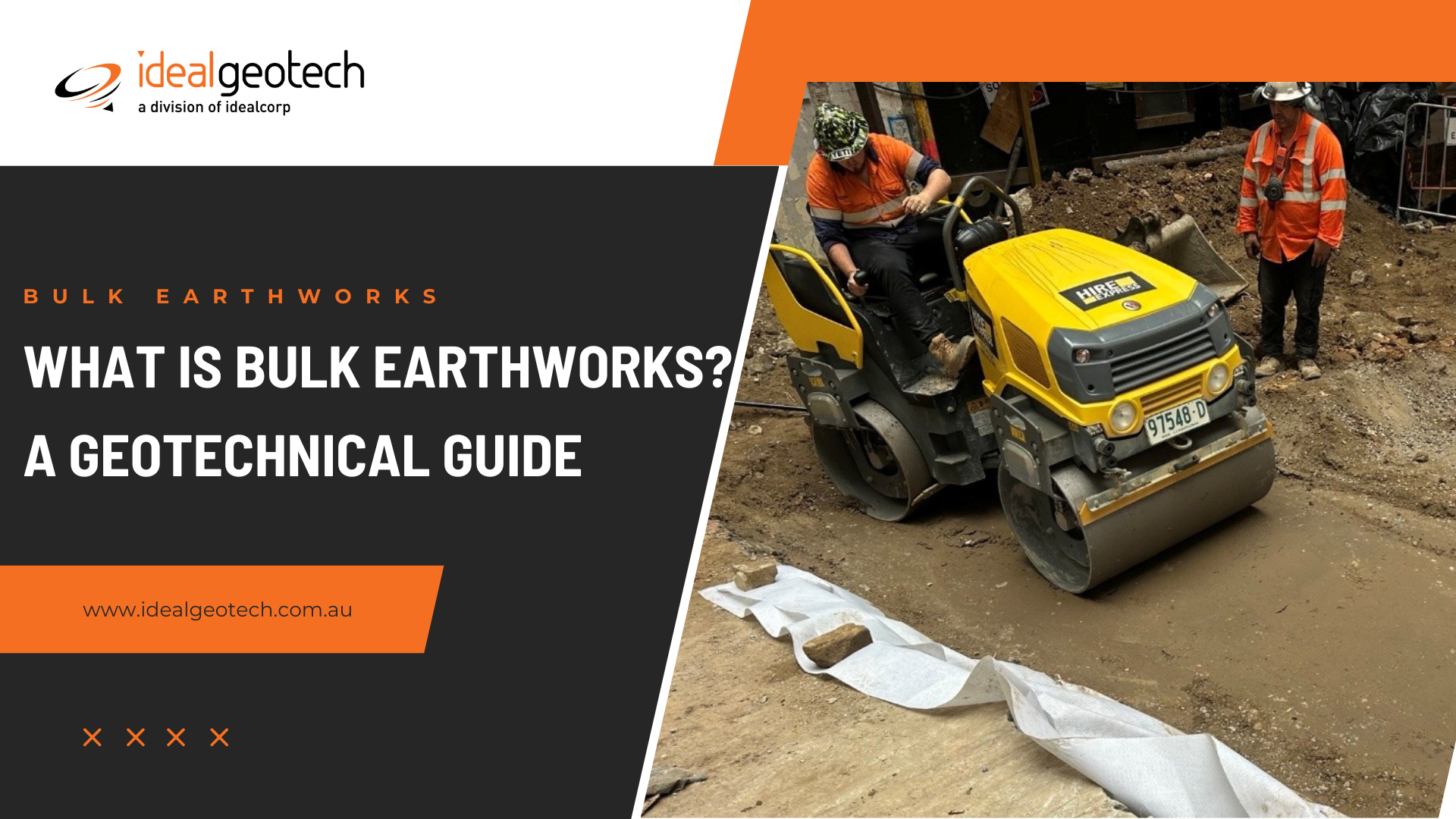

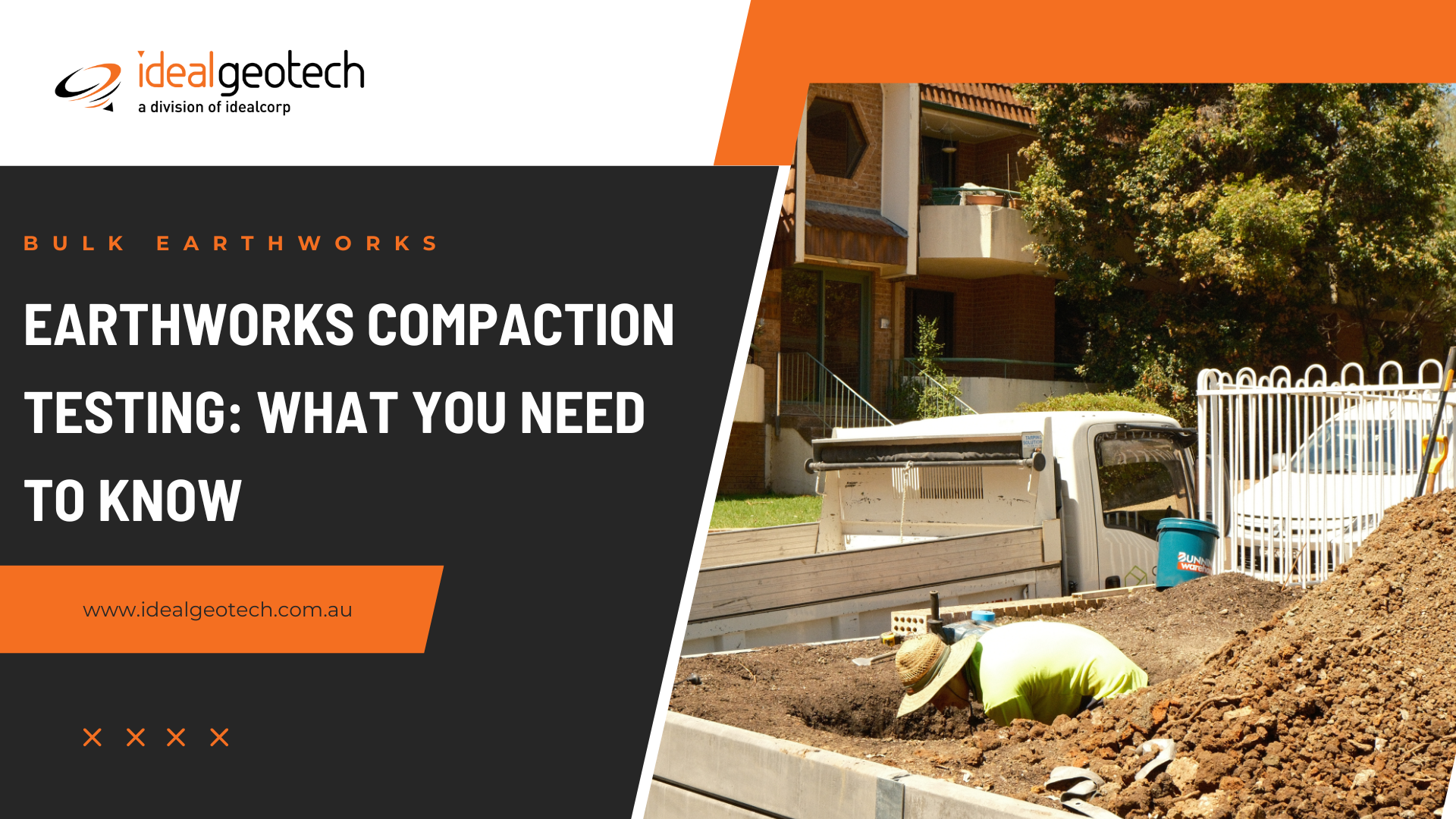
Compaction testing is a critical part of bulk earthworks, ensuring that placed soils and materials achieve the required strength, stability and long-term performance.
From a geotechnical perspective, earthworks compaction testing is essential for verifying compliance with AS3798 – Guidelines on Earthworks for Commercial and Residential Developments and providing confidence that the ground is fit for construction.
This guide explains what earthworks compaction testing involves, why it matters and how it is applied on site.
1. What Is Earthworks Compaction Testing?
Earthworks compaction testing verifies that soil and fill materials have been compacted to the specified density and moisture requirements.
The purpose of compaction testing is to:
-
Reduce settlement risk
-
Improve bearing capacity
-
Control moisture-related movement
-
Confirm compliance with project specifications and AS3798
Testing is undertaken during construction to validate that earthworks are being placed and compacted correctly.
2. Why Compaction Testing Matters
Poorly compacted earthworks can lead to:
-
Ground settlement
-
Pavement and slab cracking
-
Loss of bearing capacity
-
Costly remediation works
Compaction testing provides objective, measurable confirmation that earthworks meet design and performance requirements before construction progresses.
3. Common Compaction Testing Methods
Earthworks compaction testing typically involves a combination of field and laboratory testing.
3.1 Field Density Testing
Field density testing verifies in-situ compaction performance.
Common methods include:
-
Nuclear Density Gauge (NDG) testing
-
Dynamic Cone Penetrometer (DCP) testing
These tests measure achieved density and strength relative to laboratory-determined benchmarks.
3.2 Moisture Content Testing
Moisture content plays a critical role in compaction performance.
Testing confirms that materials are compacted within acceptable moisture ranges to:
-
Achieve target density
-
Reduce shrink-swell behaviour
-
Improve long-term performance
3.3 Maximum Dry Density (MDD) Testing
Laboratory testing is undertaken to determine Maximum Dry Density (MDD) using:
-
Standard compaction
-
Modified compaction
Field results are compared against laboratory MDD values to confirm compliance with specified compaction percentages.
3.4 California Bearing Ratio (CBR) Testing
CBR testing assesses the load-bearing capacity of compacted materials.
CBR values are commonly required for:
-
Pavement design
-
Roadworks
-
Industrial hardstand areas
Testing helps confirm materials are suitable for their intended use.
4. Compaction Testing Under AS3798
AS3798 provides guidance on compaction and testing requirements, including:
-
Target compaction levels
-
Testing frequency
-
Acceptable moisture ranges
-
Documentation and reporting
Testing intensity and supervision levels (Level 1 or Level 2) are determined by a geotechnical engineer based on site conditions and project risk.
5. When Is Compaction Testing Required?
Compaction testing is typically required:
-
During bulk earthworks
-
When placing structural fill
-
For pavements and hardstand areas
-
Where site-won or imported materials are used
-
When required by councils, certifiers or engineers
Early planning ensures testing is integrated into the construction program without delays.
6. Common Compaction Testing Issues
Common issues identified during testing include:
-
Over-dry or over-wet materials
-
Inadequate compaction effort
-
Variable material quality
-
Poor moisture control
Identifying these issues early allows corrective action to be taken before works progress.
7. Compaction Testing with Ideal Geotech
Ideal Geotech provides independent earthworks compaction testing in accordance with AS3798, supporting compliant and reliable construction outcomes.
Our services include:
-
Field density and DCP testing
-
Moisture content verification
-
Laboratory MDD and CBR testing
-
GPS-coordinated test coverage
-
Clear, contractor-ready reporting
-
Integration with Level 1 and Level 2 supervision
Our focus is on practical advice, timely reporting and confidence in ground performance.
8. Build with Confidence from the Ground Up
Earthworks compaction testing is a critical checkpoint in any construction project.
With independent geotechnical testing and clear reporting, projects gain certainty that the ground is stable, compliant and ready for the next stage of construction.
IdealGeotech helps projects take control of earthworks quality—delivering confidence from the ground up.