
Bulk earthworks requires more than moving soil. It demands careful geotechnical assessment, strategic planning, controlled execution and full compliance with Australian Standards.
Our structured 5-step bulk earthworks process ensures ground stability, material suitability and complete confidence from planning through to project handover.
1. Early-Stage Site Assessment
Every successful bulk earthworks project starts with understanding the site conditions before works commence.
At this stage, we identify site constraints, development requirements and potential geotechnical risks that could impact earthworks. Early environmental and contamination screening is undertaken where required to flag remediation risks before construction begins.
This early-stage assessment provides clear, practical insights that help reduce surprises, delays and costly variations later in the project.
2. Ground & Material Assessment
A detailed assessment of ground conditions and materials is critical to achieving stable and compliant earthworks.
We assess subsurface and surface conditions to evaluate soil stability, moisture behaviour and material suitability. Soils, aggregates and site-won materials are tested and classified to determine whether they can be reused or require treatment or replacement.
At this stage, we also provide advice on risks affecting excavation, compaction, drainage and long-term performance, ensuring materials placed on site are fit for purpose.
3. Earthworks Strategy & Planning
With a clear understanding of ground conditions, we work collaboratively with civil engineers and project teams to develop an efficient earthworks strategy.
This includes optimising cut and fill balances, staging earthworks to suit construction sequencing, and recommending the reuse or treatment of site-won materials where appropriate. Where required, we support planning with laboratory testing and reporting such as PSD, MDD, CBR, reactivity and contamination assessments.
A well-planned earthworks strategy reduces import costs, improves program certainty and supports long-term ground performance.
4. Controlled Execution & Level 1 / Level 2 Supervision
During construction, controlled execution and independent supervision are essential to achieving compliant bulk earthworks.
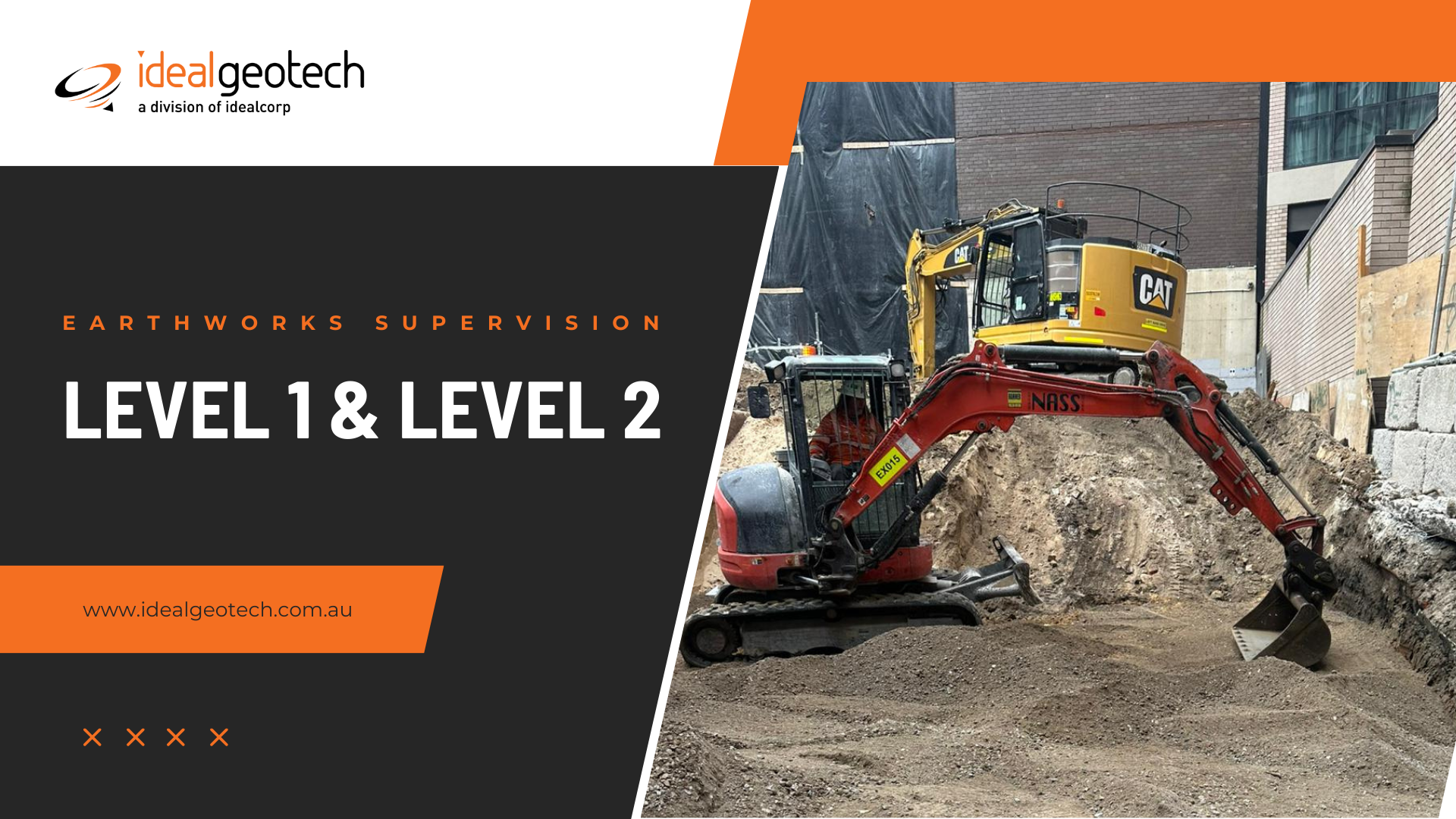
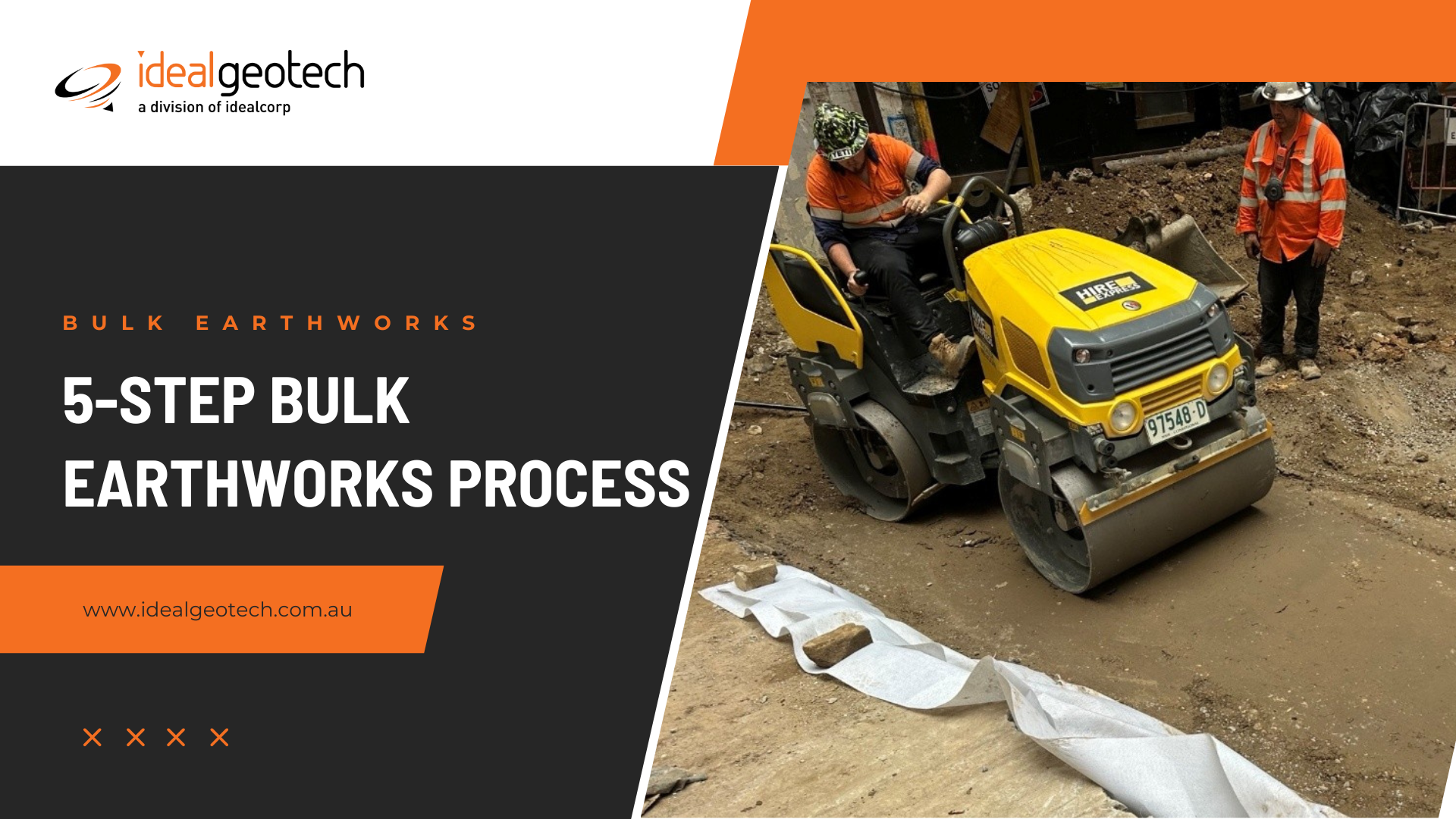
We oversee bulk excavation, filling and compaction in accordance with design requirements and AS3798. GPS-coordinated test locations are used to ensure accurate coverage across both horizontal and vertical extents of the site.
On-site testing includes density testing (DCP), moisture content, maximum dry density (Standard or Modified), and proof-roll assessments. Level 1 or Level 2 supervision is provided as required, giving confidence that earthworks are executed correctly and consistently.
5. Compliance, Reporting & Handover
The final stage of the bulk earthworks process is delivering certainty through clear documentation and certification.
We provide contractor-ready reports including compaction results, CBR values, density testing and laboratory results. Material classifications such as VENM and ENM, contamination reporting and environmental documentation are issued where applicable.
Level 1 or Level 2 certification is completed to confirm compliance with AS3798, ensuring full traceability, regulatory compliance and a smooth handover to the next stage of construction.
Outcome: Certainty from the Ground Up
By following a structured, geotechnical-led bulk earthworks process, projects move forward with confidence, reducing risk, controlling costs and ensuring the ground performs as intended.